
The Ride-Sharing Wars
In the build up to Lyft’s and Uber’s long-awaited IPOs, our IPO analysts took a look at the evolving vehicle-for-hire market and discovered that it is crowded, cutthroat, regionally different, inconsistently regulated and increasingly dependent on app-based technology platforms.
There’s no question that Lyft (LYFT) and Uber have been disruptive forces that are changing the paradigm of highly regulated traditional street hailed taxis and corporate black car fleets. Instead of crushing the legacy incumbents, Lyft, Uber and Asian giants have inspired unconstrained global competition, with many new hopefuls entering local markets.
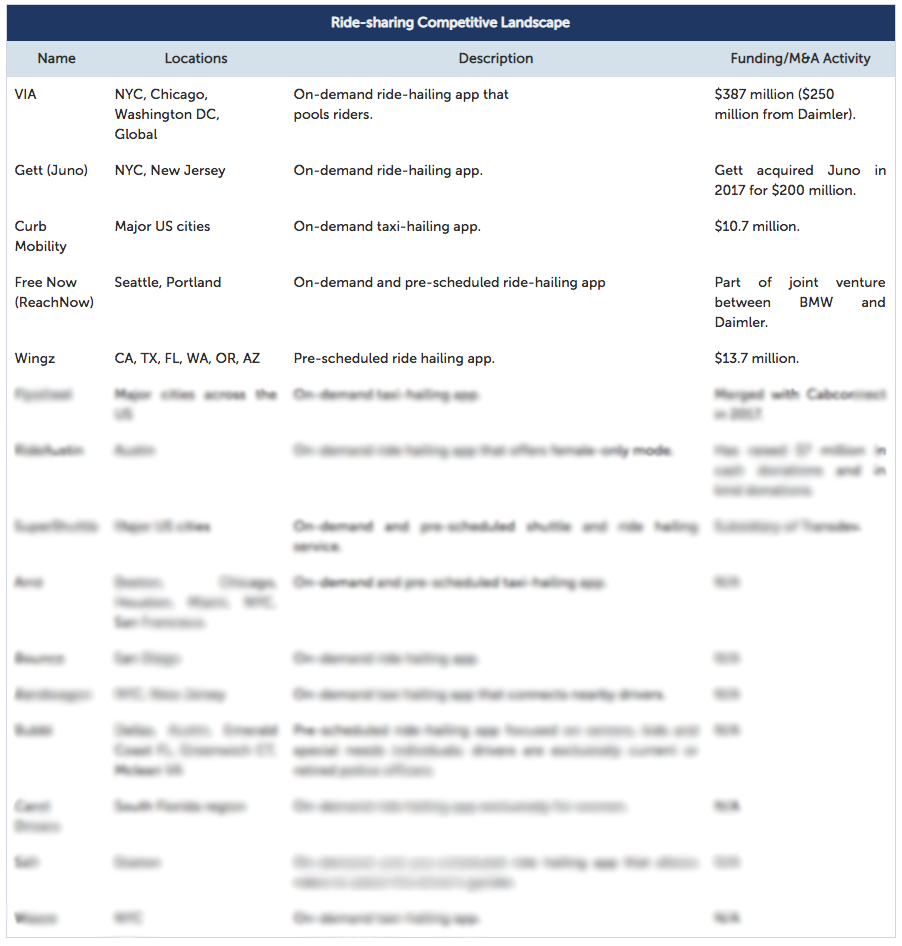
In major metropolitan areas, riders now have the choice of app-based ride hailing services with contracted private owner-operators, licensed taxis hailed on the street and new ride sharing apps that summon participating licensed taxi and fleet operators, prescheduled black cars, apps offering specialized prescheduled rides for women and children, and last but not least, public transit. Uber operates in the US and internationally, while Lyft’s operations are largely confined to the US and Canada, with a very limited number of international partnership agreements to date.

 To read the entire article, sign up for a free 7-day trial of IPO Pro, the single, most effective IPO data platform you'll ever need.